
Fitness & Performance
How long does it take for exercise to improve blood glucose?
Jorge Marin
Science Writer
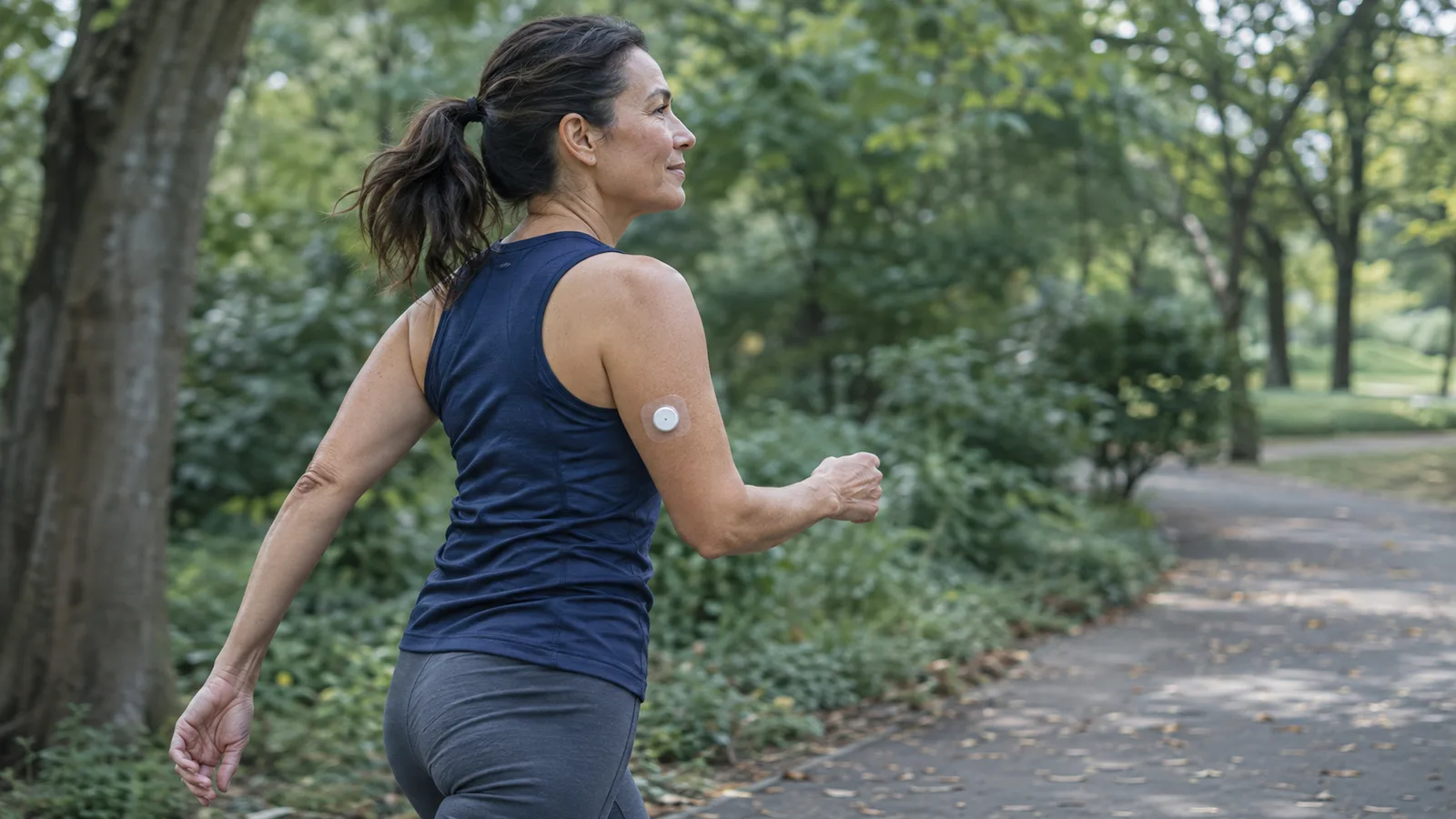
Blood glucose responds as early as the day after exercise, but glycated hemoglobin needs at least three months to reflect the change.
The question comes up so often in doctors’ offices that it almost sounds rehearsed: “I started working out. When will I see a difference in my lab results?” It’s a legitimate concern, especially for people who have been diagnosed with prediabetes and told that exercise is part of the treatment.
The right answer, however, doesn’t fit into a single number of weeks, because exercise improves glucose at two speeds at the same time: one that is almost immediate and happens with every session, and a slower one that builds up over months and is the one that shows up in routine blood work.
The body’s first response is fast. According to the 2025 guideline from the Sociedade Brasileira de Diabetes (SBD), the Brazilian Diabetes Society, a single exercise session already increases glucose uptake by the muscles. In the first few hours, movement itself does this work; afterward, the muscle becomes more sensitive to insulin, and the benefit can last up to two days.
But if the body reacts so quickly, why does the result take so long to show up on paper?
When does exercise show up in lab results?
Glycated hemoglobin (HbA1c), the main test used to monitor prediabetes, doesn’t reflect the body’s response overnight. “It represents an average of glucose over the past three months,” explains Roberto Zagury, an endocrinologist at the Laboratório de Performance Humana (LPH) and a fellow of the American College of Physicians.
That’s why measuring HbA1c a month after starting to train tells you little. In an interview with Prime Health Report (PHR), the physician points out that the result would still be “contaminated” by the two months in which the patient wasn’t exercising. The timeline applies to any treatment, with or without medication: at least three months.
Blood glucose, on the other hand, responds much sooner. “If I exercise today, I already get a benefit tomorrow,” the endocrinologist says. Both fasting glucose and post-meal glucose show the effects of training much more quickly.
Is one session enough, or is the effect cumulative?
A single session already lowers glucose, but turning that effect into a lasting improvement depends on consistency. For Zagury, exercise should be viewed as a daily medication, and, like any medication, it isn’t enough for it to be the right one: you have to take it at the right dose.
“The right medicine is exercise. The right dose would be at least three times a week, about 150 minutes a week,” he sums up. A one-minute session per week, he says, would be the right medicine at the wrong dose.
Rodrigo Sudatti Delevatti, a professor in the Department of Physical Education at the Universidade Federal de Santa Catarina (UFSC) who holds a PhD in Human Movement Sciences from the Universidade Federal do Rio Grande do Sul (UFRGS), reinforces this logic. “There is a summation of acute effects, and a clinical and functional improvement that is closely tied to how much of the planned program is followed,” he says.
The importance of dose also shows up in the numbers. A meta-analysis of 47 clinical trials, published in 2011 in JAMA and cited by the SBD guideline, included 8,538 people with type 2 diabetes: those who did up to 150 minutes of structured exercise per week had an average drop of 0.36 percentage points in HbA1c, compared with 0.89 points among those who exceeded that threshold.
Strength training or aerobic exercise: which works better for glucose?
Strength training and aerobic exercise lower glucose through different pathways, but the benefits add up when both are part of the routine. Zagury explains how these effects combine with simple math: in medicine, an additive effect is when one plus one equals two; a synergistic effect is when it equals three. “Here it’s an additive effect: you add up the benefits of both,” he says.
Delevatti recommends the same combination. “Not only for the prevention and treatment of diabetes, but for health in general, a combination of cardiorespiratory/aerobic exercise and strength/muscular endurance exercise is recommended,” he says. In some cases, especially in older adults, he adds balance and flexibility exercises.
How to start exercising with prediabetes
Enjoying the chosen activity may be the starting point, according to Delevatti. “The most important thing is to find some type of exercise you enjoy doing. That will make it easier to sustain the habit over time,” he says. He recommends an evaluation before starting and a modest beginning, with two to three sessions a week that are neither too long nor too intense.
For those who start and end up quitting, the professor suggests broadening the options. “Expanding the range of possible exercises beyond the traditional walking/running and strength training, along with a gradual progression of load, should encourage adherence,” he notes. The SBD guideline also points out that cutting down on sitting time counts: ideally, inactivity should be broken up every 30 minutes.
Is more exercise always better for glucose?
When it comes to blood glucose, there is no limit beyond which exercise starts to get in the way. “The more you do, the more you lower glucose,” Zagury says. That doesn’t mean, however, that endlessly increasing volume and intensity is better in every respect. Too much raises the risk of injuries and respiratory infections and, in women, can even stop menstruation.
Signs that training is working also show up in daily life. According to Delevatti, people who monitor their glucose at home notice lower readings after sessions and, with consistency, lower readings before workouts as well. The body offers other clues: thirst, trips to the bathroom, hunger at odd hours and fatigue tend to decrease as control improves.
When is exercise alone not enough?
Medical follow-up is what will determine whether exercise alone is enough. Zagury gives an example: a patient starts with a glycated hemoglobin of 5.8%, within the prediabetes range, and begins exercising regularly at the right dose. Six months later, however, the result rises to 6.2%, and three months after that it reaches 6.4%, very close to the diabetes range.
“The tests are clearly showing that exercise isn’t managing to slow this progression,” he explains. In that scenario, he would add a medication to the exercise before the prediabetes progressed to type 2 diabetes.
A single exercise session already has an effect. The challenge is to repeat it, week after week, until it shows up in the lab results. For both experts, more than waiting for the number to change, what matters is sustaining the habit: it is consistency, not the isolated workout, that will show up in your glycated hemoglobin result three months from now.