
Health & Science
Persistent toe walking in children with autism
This pattern may call for a specific clinical approach, a scientific review suggests
Leila Moretti
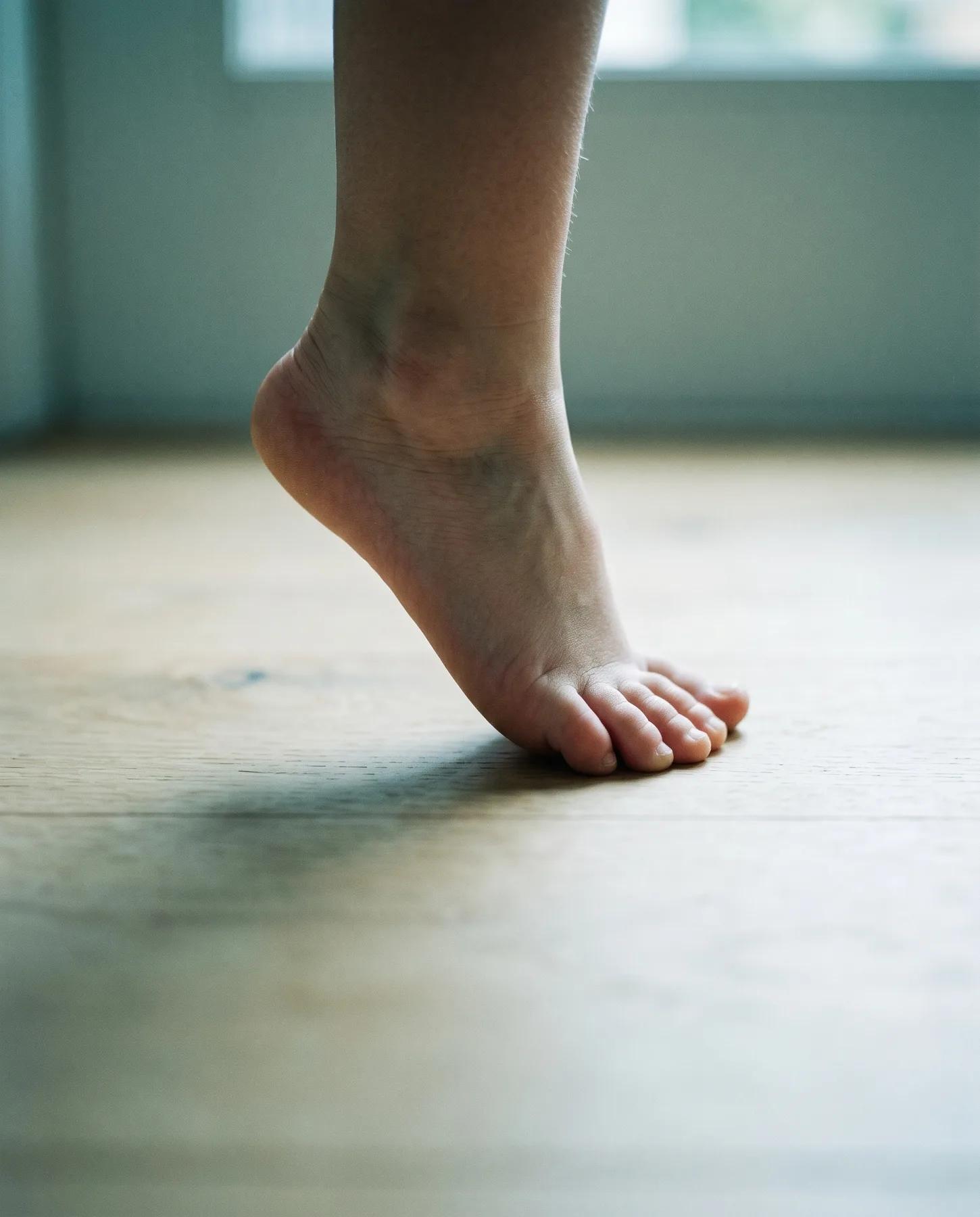
A review published in Children brings together evidence that children with autism spectrum disorder have a higher frequency of persistent toe walking, a lower rate of spontaneous resolution and a higher rate of recurrence after treatment.
Walking on tiptoe can be part of motor development in the first years of life. When the pattern persists past age 3, however, it warrants investigation. In children with autism spectrum disorder (ASD), a review published in the journal Children suggests that persistence may carry a different clinical meaning than in so-called idiopathic toe walking (idiopathic toe walking, ITW).
The issue is not just one of terminology. Idiopathic toe walking is a diagnosis of exclusion, used when no known neuromuscular cause explains the pattern. The authors argue that automatically placing children with ASD in this category may mask relevant differences in prevalence, course and response to treatment.
For that reason, they propose the term autistic toe walking (ATW) to describe persistent toe walking associated with autism. The classification, however, is the authors’ proposal and should not be interpreted as a new diagnosis or an established clinical consensus.
What the review found
The narrative review compiled studies published between 2005 and 2023, identified in the PubMed and Scopus databases. It analyzed research involving children and adolescents with ASD and persistent toe walking.
Although the authors used PRISMA 2020 principles adapted to the narrative format, there was no meta-analysis and no formal risk-of-bias assessment. Some of the clinical recommendations also explicitly incorporate the senior author’s experience. These features matter when gauging the strength of the conclusions.
Despite these limitations, the studies compiled point to relevant differences between children with and without ASD.
In the general population, the prevalence of toe walking reaches about 5% when children start walking. Among children with ASD, the studies report highly heterogeneous figures, from 6.3% to 62.9%, but most studies place average estimates between 20% and 40%. The highest estimates come from work done two decades ago and reflect more restrictive ASD diagnostic criteria, predating the inclusion of milder forms; the most recent analysis cited in the review points to a prevalence of around 20%.
The natural history also appears to differ.
A large retrospective analysis compared 484 patients with ASD and toe walking with 10,480 children with ITW. Spontaneous resolution at ten years was 34.4% in the ASD group, versus 80.7% among children with idiopathic toe walking. The need for surgery was also higher: 3.3% versus 1.2%.
On their own, these numbers do not prove that ATW is an independent clinical entity. But they help explain why the authors question the idea that the two groups necessarily follow the same course.
More than a difference in frequency
The review also compiles evidence of a higher occurrence of triceps surae shortening and of recurrence after treatment among children with ASD. One of the analyses found an odds ratio of 2.91 for developing persistent toe walking and of 2.28 for triceps surae shortening — compared with children with idiopathic toe walking and no other neurodevelopmental disorders.
Differences in sensory processing, motor coordination and other aspects of neurodevelopment appear to be associated with the condition. The authors, however, make a fundamental caveat: association does not mean causation. It is not possible to say that these characteristics are responsible for toe walking or that treating them will make the pattern go away.
Recurrence also deserves attention. The compiled studies indicate that it may be higher after interventions in children with ASD, including after surgery.
The available figures are striking: one series found a likelihood of recurrence after surgery about five times higher in children with ASD or sensory processing disorder (24% versus 5%), and another reported 75% versus 67.2%.
Part of this difference may stem from the surgical technique used, which was not always specified in the studies. This reinforces the need to discuss prognosis and treatment expectations on an individual basis.
What changes in practice?
The review does not support the idea that every child with ASD who walks on tiptoe needs to be treated — much less that they should receive a specific intervention.
What the data suggest is the need to not automatically assume that their course will be the same as in idiopathic toe walking.
The evaluation should investigate other possible causes of the gait pattern and consider factors such as how often the child toe walks, the ability to correct it voluntarily, range of motion, the presence of contractures or deformities, pain, functional limitation and the child’s individual characteristics. Among the differential diagnoses, the main one is mild diplegic cerebral palsy. Two features point to idiopathic toe walking or ATW: the ability to correct the pattern voluntarily, at least partially, when asked; and keeping the knees extended in terminal swing and at initial contact — whereas cerebral palsy usually presents with a flexed-knee pattern at these points in the gait cycle.
The review itself presents criteria for targeted physical therapy, orthoses, serial casting and surgery. Among them: targeted therapy from age 3, when toe walking takes up more than 50% of the observed time and persists for at least six months despite the usual multidisciplinary therapies, in the absence of a fixed contracture; serial casting when dorsiflexion is limited to values worse than −10 degrees with the knee extended, preferably up to age 8; and surgery above that age with dorsiflexion below 0 degrees, at any age when there is an equinus contracture of 10 degrees or more, or after a failed casting protocol. The review also does not recommend botulinum toxin for any form of persistent toe walking — there is no evidence that it alters the natural history, a randomized controlled trial found no benefit in adding it to serial casting, and the rationale for the drug is spasticity, a mechanism not considered central to this condition. However, much of these recommendations derive from case series and the authors’ clinical experience rather than from controlled trials. Therefore, they do not constitute an established standard of care.
“Undertreating”: the most common mistake in referrals
Lead author of the review and a pediatric orthopedic surgeon at Hospital Israelita Albert Einstein and Universidade de São Paulo, Dr. Luiz Renato Agrizzi de Angeli explained to our reporters how these parameters translate into clinical practice. Asked which mistake he sees most often in referrals, his answer is direct:
“Undertreating. Many children are referred to a pediatric orthopedist far too late, after years of physical therapy or measures that clearly didn’t work.”
He proposes a short list of signs that should prompt referral to a pediatric orthopedist:
• Inability to stand with the feet flat on the floor — including when having their height measured at the office;
• Calluses on the forefoot combined with a thin heel;
• A child over 3 who walks on tiptoe most of the time;
• Pain in the feet or calves;
• Repeated ankle sprains;
• Fatigue when walking long distances or doing physical activity.
When surgery comes before casting
The review notes that children with ATW may tolerate surgery better than serial casting — a reversal of the usual logic of stepwise treatment. Asked which patient leads him to skip casting and go straight to lengthening, the physician describes a specific profile.
“Generally, a patient with a behavioral disorder, such as level 3 support autism, who has considerable psychomotor agitation responds better to surgery. Serial casting in these patients would have to be done in an operating room, because the child needs to stay still while the cast is applied. At the same time, serial casting has higher recurrence rates than surgery. So in these patients, even if they don’t have severe shortening, the best option is to recommend surgery.”
According to him, anesthesia weighs less heavily on the decision than one might assume — as long as planning is adequate.
“More than three sedations are rarely needed. To this day I have never had to anesthetize a child more than three times. Most patients need only the first anesthesia, to apply the cast or operate, and a second one to remove the casts — and in some cases we can safely remove them in the office.”
What to tell a family hoping for a cure
The review notes that it is uncommon for a child with ATW to stop toe walking completely after treatment. This finding often disappoints expectations, and Dr. de Angeli describes how he reframes the treatment goal when talking with parents.
“I tell them the child may keep going up on their toes when agitated, or even walk on tiptoe at times after treatment, because that is part of their self-regulation. When it is very occasional, or when the patient spends less than 25% of the time on tiptoe, it doesn’t cause shortening or require further treatment. The problem is when, after treatment, they go back to walking on tiptoe more than 50% of the time — then the shortening returns and new approaches are needed. So I reassure families by saying that what matters is improving the shortening and ending the continuous bad habit of toe walking.”
The two thresholds he cites match the outcome definitions proposed in the review: a favorable result corresponds to time on tiptoe below 25% with at least 10 degrees of dorsiflexion maintained, while persistence above 50% characterizes an unsatisfactory result and calls for reassessing the strategy. In practice, the target of treatment is the contracture and the continuous habit — not complete elimination of the behavior.
The evidence still calls for caution
The main limitation lies in the quality of the available studies. Small, heterogeneous studies predominate, with differences in diagnostic criteria, interventions and how outcomes were measured. There is not enough high-quality evidence to determine which treatment offers the best results specifically for children with ASD.
For that reason, perhaps the review’s main contribution is not proposing a new therapy, but questioning a clinical classification.
The compiled data suggest that children with ASD and persistent toe walking may form a group with its own natural history and prognosis. Recognizing this possibility could improve evaluation, make conversations with families more realistic and prevent treatment decisions from starting from the premise that ATW and idiopathic toe walking are necessarily equivalent.
Confirming this hypothesis, however, will require prospective studies, standardized diagnostic criteria and long-term follow-up.
_____________
Scientific reference
de Angeli LRA, Serafim BLC, Masquijo JJ. The Autistic Toe Walking: A Narrative Review for Interventions and Comparison with Idiopathic Toe Walking. Children. 2025;12(9):1198.
Study type: narrative literature review.
DOI: 10.3390/children12091198.