Fitness & Performance
VO2 max: The number that became a “longevity score”
Jorge Marin
Science Writer
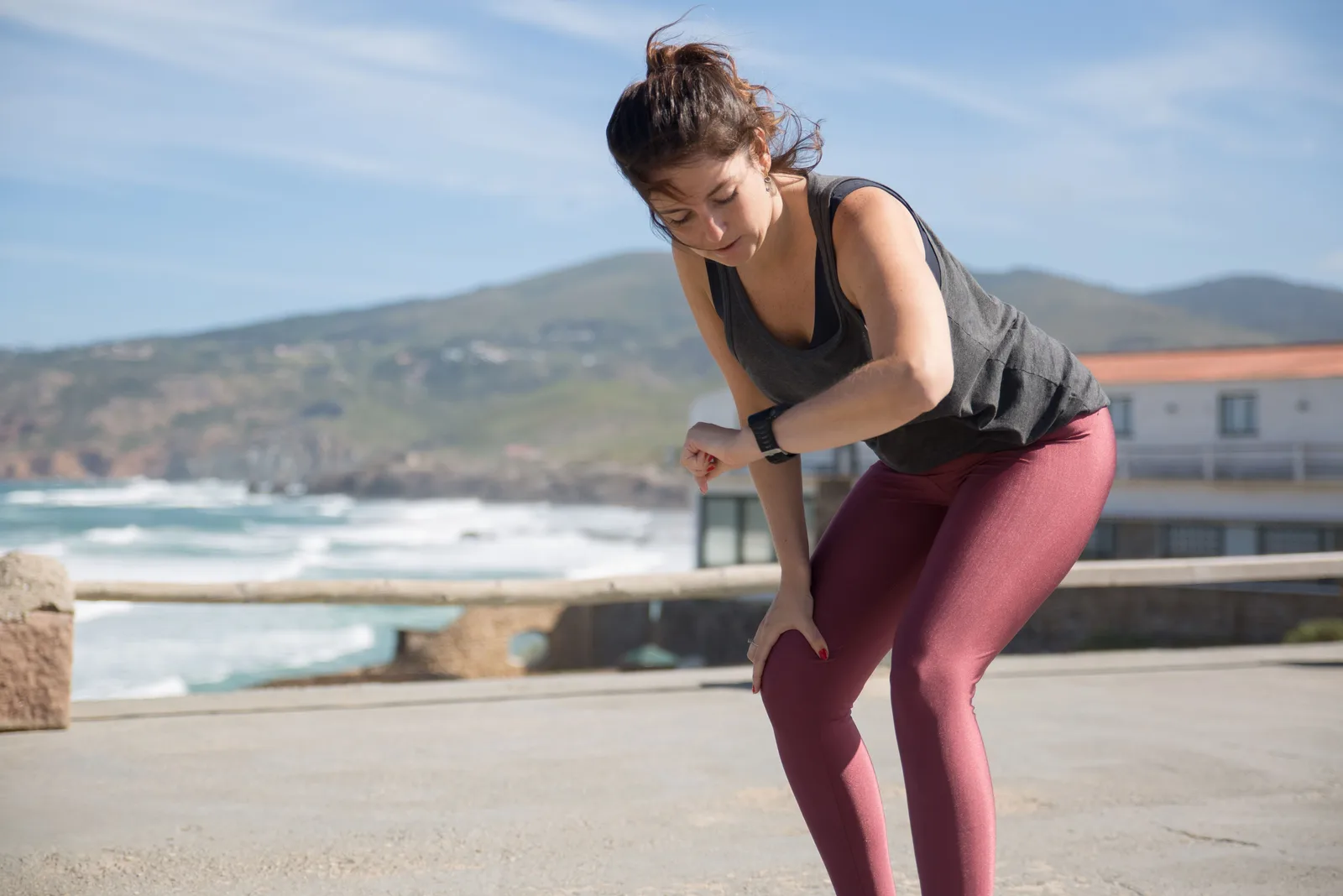
Once limited to athletes and labs, the measure of maximal oxygen uptake has made its way onto smartwatches and become an indicator of health and longevity.
At the end of a hard workout, your watch buzzes, and alongside your heart rate and distance covered, a performance metric pops up that, until recently, few people knew how to interpret: VO2 max. Today it is part of the vocabulary of anyone who runs, cycles or simply tracks their health from their wrist. On social media, it has become a kind of “digital trophy,” used to validate and compare effort.
The metric has more than 100 years of history and was created to measure how much oxygen the body can take in and use during maximal exertion. For decades, VO2 max has been obtained through cardiopulmonary exercise testing, the test with a mask on a treadmill or stationary bike performed in exercise physiology labs and high-performance training centers, as well as in some clinics and hospitals.
What changed was the scale. Brands geared toward endurance athletes built in algorithms that could estimate the metric by cross-referencing heart rate data with running pace (via GPS). Once a test reserved for athletes and patients, the number now appears within seconds on the screen of any smartwatch or smart ring.
Starting in 2018, interest in VO2 max exploded after a Cleveland Clinic study of more than 122,000 patients linked higher levels of maximal oxygen uptake to a lower risk of death from various causes. It didn’t take long for the metric, until then largely confined to the sports world, to earn an ambitious nickname: the “longevity score.”
But does an estimate flashing on your wrist carry the same scientific weight as a lab measurement — and what should this number actually change in the routine of people who see it every day?
Why did VO2 max become synonymous with life expectancy?
Physiologically, VO2 max “measures the body’s ability to deliver oxygen to the muscles and turn it into energy,” cardiologist Ricardo Stein, an associate professor of internal medicine at the Universidade Federal do Rio Grande do Sul (UFRGS) and one of Brazil’s leading experts in cardiopulmonary exercise testing, told Prime Health Report.
The metric reflects the combined work of the lungs, heart, blood vessels and muscles. Because it integrates so many systems at once, it works as
a kind of thermometer of overall health — which helps explain why its value has also come to be associated with health and longevity.
That doesn’t mean, however, that a higher VO2 max by itself makes someone live longer. “Studies show a very consistent association: the higher the VO2 max, the lower the risk of death tends to be, including from cardiovascular disease,” Stein explains — but it is, above all, “a very powerful marker of the body’s health and functional capacity,” not a guarantee on its own of a longer life.
This cardiorespiratory capacity isn’t fixed, either: it tends to decline by an average of 5% to 10% per decade starting at age 30, according to the cardiologist. But the extent of the loss varies with factors such as genetics, sex and, above all, physical activity level. Keeping up with training can substantially soften the decline.
Do smartwatches estimate VO2 max accurately?
Wearables don’t measure VO2 max directly: they estimate it from various pieces of information. In an interview with PHR, Marco Uchida, head of the Applied Kinesiology Laboratory at the Universidade Estadual de Campinas (Unicamp), explained that the algorithms combine personal characteristics — age, sex and body mass — with data collected during exercise, including pace, distance and heart rate.
Newer wearable models also incorporate photoplethysmography sensors, the technology in watches and bands with LEDs on the back: the sensor shines light on the wrist and measures how much of that light is absorbed or reflected by the blood.
But all this technology still doesn’t close an important gap with the lab. The gold standard for measuring VO2 max is cardiopulmonary exercise testing — “the test we see in news stories about soccer, with a mask and a gas analyzer,” Uchida notes.
A systematic review and meta-analysis published in 2022 by the international INTERLIVE network, cited by the Unicamp professor, showed that watches can have a margin of error of 5% to 10%, depending on the brand and model. According to him, devices more geared toward sports tend to come closer to the lab measurement.
That’s why, rather than fixating on a single day’s value, it’s more important to watch how it behaves over time. “Wearable technology... compares you with yourself,” says Uchida. A series of measurements makes it possible to spot improvement, plateaus or decline and, if needed, adjust training with guidance from a physical education professional.
You can improve the number — but how much does it matter?
The good news is that VO2 max can improve even after age 50 or 60. “Age doesn’t prevent a significant improvement in VO2 max,” says Stein. People who start training at this stage of life can achieve substantial gains with regular aerobic exercise, interval training and strength training. The goal isn’t to regain the VO2 max of your youth, but to preserve physical capacity and slow some of the loss associated with aging.
The problem is that the risk of turning a wellness metric into a source of anxiety is also real — and it lies in the details of how the data is read. Uchida points to two common mistakes: checking VO2 max every day — “there’s always built-in error,” he warns — and comparing values obtained under different conditions. Different routes, distances, terrain and speeds can produce numbers that aren’t directly comparable.
In the end, VO2 max carries a simple message behind the technical acronym: cardiorespiratory fitness is something you can train, and it starts declining early. As Stein sums it up, more important than “hitting a specific number is being above average for your age group and, above all, maintaining or improving your fitness over time” — a far healthier goal than chasing a standalone score on your wrist.