Health & Science
Sleepmaxxing: when the quest for perfect sleep gets in the way of rest
Equipe Prime Health Report
Newsroom
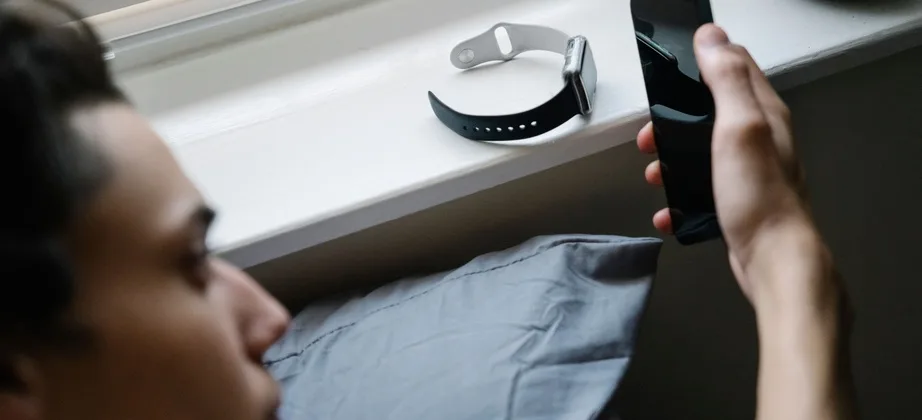
The trend blends useful habits, devices, supplements and risky practices. Experts explain what is backed by science, what calls for caution and when to seek care.
Sleeping well has become a goal tracked with scores, charts and a growing list of products. On social media, this pursuit has a name: sleepmaxxing. The term covers everything from familiar measures — keeping regular hours, setting aside enough time for sleep and creating a suitable environment — to supplements, trackers and practices such as taping the mouth shut overnight.
The problem lies in treating this mixed bag as if it were a single scientific protocol. It isn’t. Some measures line up with well-established sleep health recommendations; others have limited evidence, depend on a clinical indication or may pose risks. And there is a paradox: trying to control every detail of rest can increase anxiety and make sleep even harder.
What’s useful about sleepmaxxing
The most defensible part of the trend is also the least spectacular. According to Dalva Poyares, a neurologist and faculty member in the Sleep Medicine and Biology program at the Universidade Federal de São Paulo (Unifesp), improving the sleep environment, keeping a regular schedule that fits your biological rhythm and avoiding sleeping less than you need are measures with reasonable support.
“The pursuit of perfect sleep and absolute control over every variable that might promote or interfere with sleep can be harmful,” says Dalva Poyares.
That means reducing light and noise when possible, protecting your rest period and aiming for relatively consistent hours. These strategies don’t guarantee a perfect night or work as a universal treatment, but they act on factors that organize the sleep-wake cycle. The benefit doesn’t depend on buying a device or chasing a score.
The sleepmaxxing label itself can blur this distinction. A coherent, sustainable routine is not the same as a supplement promoted by influencers or a breathing hack. Evaluating each component separately is more useful than accepting or rejecting the trend as a whole.
When measuring sleep goes too far
Smartwatches and smart rings can help some people notice irregular schedules or recurring periods of insufficient sleep. But consumer devices estimate sleep from indirect signals and vary in accuracy. They are no substitute for a clinical evaluation or tests such as polysomnography.
The comparison matters because a detailed chart can convey a certainty the device doesn’t have. A person may wake up feeling rested and still worry about a lower-than-expected score. In other cases, they may read a seemingly good result as proof that there is no health problem.
Dalva warns that rigid control over sleep can increase anxiety, worsen insomnia and encourage the search for quick fixes, including medication. In the medical literature, the term orthosomnia has been proposed to describe excessive preoccupation with achieving what is considered perfect sleep, often driven by tracker data. It is a clinical concept under study, not a formal diagnosis recognized as a standalone disorder.
The harder you try to make sleep happen, the more alert you may become. Monitoring stops helping when the numbers dominate how you perceive your own rest, cause distress or lead to repeated changes without professional guidance.
Mouth tape is not a home treatment
Among the practices associated with sleepmaxxing, overnight mouth taping is the one that calls for the most caution. The promise is usually simple: force nasal breathing to reduce snoring, improve sleep or even change the appearance of the face. The available evidence does not support these conclusions as a rule.
Brian W. Rotenberg, a professor in the Department of Otolaryngology–Head and Neck Surgery at Western University and author of a systematic review published in 2025 in PLOS ONE, says there is no strong scientific evidence for using tape as a treatment for sleep apnea or snoring. The review also identified signs of possible harm.
“The most important conclusion is that there is no strong scientific evidence to support nighttime mouth taping as a way to treat sleep apnea or snoring, and there is some evidence that it may cause harm,” says Rotenberg, in translation from English.
The risk becomes more significant when the airway is obstructed. In obstructive sleep apnea, the blockage occurs mainly in the throat. If the passage is already compromised and the mouth is closed, Rotenberg explains, there may be a risk of complete airway obstruction. People with nasal breathing difficulties or undiagnosed apnea may not know they fall into this group.
Both experts interviewed reject indiscriminate use, but they differ on the threshold for possible exceptions. Rotenberg allows for a very narrow scenario: after clinical or surgical correction of a known cause of nasal obstruction, the practice could play some role in retraining nasal breathing in people who keep the habit of breathing through the mouth. Dalva considers mouth occlusion contraindicated and allows only extremely rare exceptions, with partial closure.
“Obstructing the mouth opening is contraindicated and should not be adopted in any situation, with extremely rare exceptions, and even then only with partial closure,” says Dalva.
This difference does not turn tape into a recommendation. On the contrary, it reinforces that any exception depends on an individual assessment by a qualified professional. It is not a hack to try at home. For Rotenberg, claims spread by celebrities that the practice treats snoring or changes facial aesthetics have no scientific support.
Magnesium and melatonin are not in the same category
Supplements also show up frequently in sleepmaxxing routines, but lumping them all together hides important differences.
In the case of magnesium, Dalva rates the evidence for sleep disorders as very low. The available studies are heterogeneous and do not support presenting the mineral as a proven treatment for insomnia or other sleep problems. A possible nutritional deficiency is a different clinical matter from taking magnesium indiscriminately to sleep better.
Melatonin, in turn, is a hormone involved in signaling the circadian rhythm. It may have specific indications, but it should not be treated as a universal solution or a harmless product for anyone. Formulation, timing, dose, age, other medications and the problem being treated all change the assessment. Dalva recommends professional supervision; individual guidance should not be turned into general dosing instructions for the public.
When poor sleep persists, adding products without identifying the cause can delay a proper workup. Trouble sleeping may be linked to habits and schedules, but also to breathing disorders, circadian rhythm disturbances, medical conditions, mental health or medication side effects.
When to seek an evaluation
Some signs indicate that the issue has gone beyond routine adjustments. Frequent, loud snoring accompanied by pauses in breathing may point to obstructive sleep apnea. Excessive daytime sleepiness, abnormal behaviors during the night and episodes that put the person or their partner at risk also warrant investigation.
Difficulty falling or staying asleep deserves attention when it occurs at least three times a week, persists for three months or more and causes impairment during the day — criteria consistent with the clinical definition of chronic insomnia cited by Dalva.
In these situations, the recommendation is not to step up monitoring or pile on hacks. It is to see a trained professional, Rotenberg stresses. An evaluation can identify the cause, determine whether testing is needed and prevent a seemingly simple practice from masking or worsening a breathing problem.
Sleep doesn’t need to be maximized or turned into a perfect sequence of metrics. It needs to be sufficient, regular and restorative within each person’s reality. When the pursuit of control starts to cause fear, frustration or risk, the method itself has stopped serving rest.
_______________
Sources and references
Brian W. Rotenberg — professor in the Department of Otolaryngology–Head and Neck Surgery at Western University; corresponding author of the systematic review on nighttime mouth taping. Responses sent to Prime Health Report on September 7, 2026.
Dalva Poyares — neurologist, sleep medicine specialist and faculty member in the Sleep Medicine and Biology program at Unifesp. Responses sent to Prime Health Report in September 2026.
Rhee J et al. Breaking social media fads and uncovering the safety and efficacy of mouth taping in patients with mouth breathing, sleep disordered breathing, or obstructive sleep apnea: A systematic review. PLOS ONE, 2025. DOI 10.1371/journal.pone.0323643.
Baron KG et al. Orthosomnia: Are Some Patients Taking the Quantified Self Too Far? Journal of Clinical Sleep Medicine, 2017. DOI 10.5664/jcsm.6472.