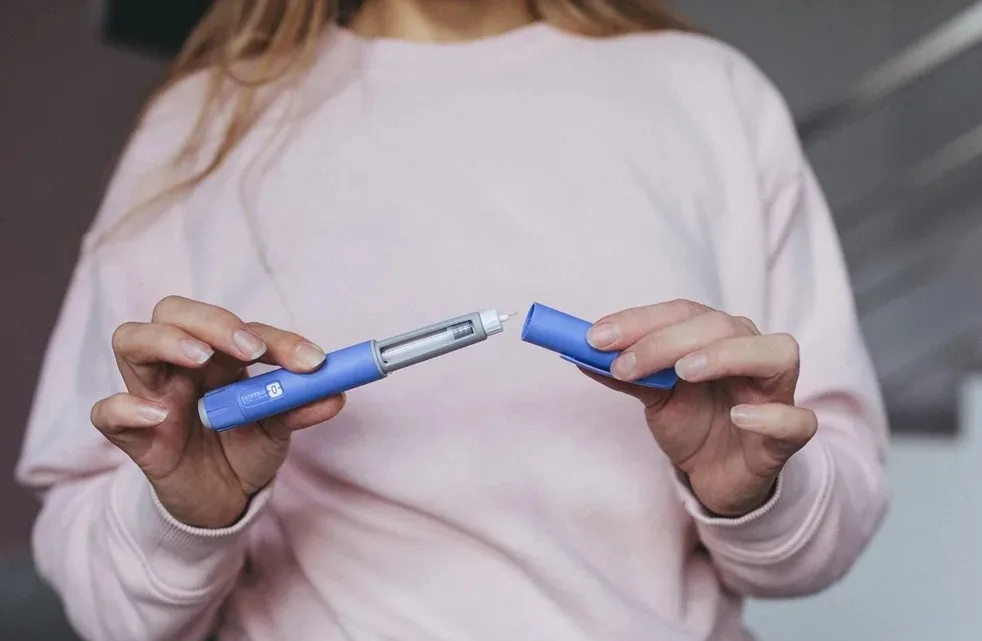
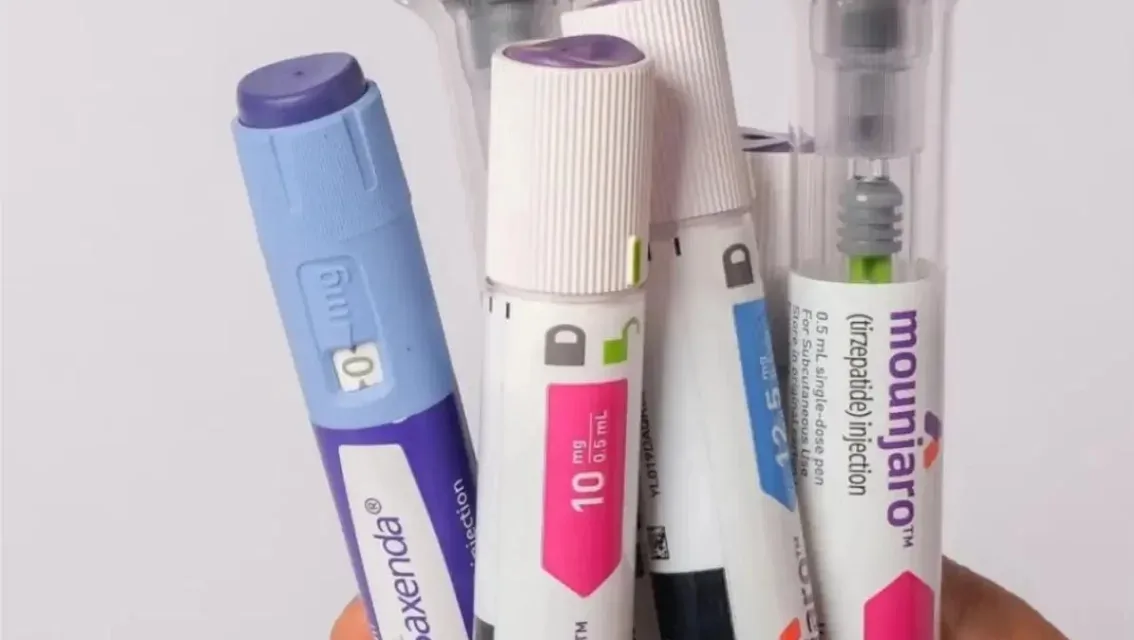
A Brazilian study published in the International Journal of Obesity found that 23.8% of participants who reported current or past use of semaglutide or liraglutide for weight loss had used these medications without a medical prescription on at least one occasion. The research included 860 adults living in Brazil and was conducted through an online questionnaire between November 2024 and April 2025.
The result stands out because nearly one in four participants reported self-medication, but the figure should not be interpreted as an estimate of national prevalence. The sample was a convenience sample, predominantly female and highly educated, and it brought together people with internet access and greater exposure to digital environments. The authors themselves state that the findings cannot be extrapolated to the entire Brazilian population.
Who appeared most often
In the adjusted analysis, use without a prescription was more frequent among participants classified as not having obesity at the time of the questionnaire, among those who did not attend fitness training centers, and among health professionals. Conversely, frequency was lower among married people, participants with diabetes, and those with a history of eating disorders.
A key caution is not to turn these associations into causal explanations. The study is cross-sectional: clinical characteristics and usage behavior were observed in the same survey, without establishing what came first.
No obesity on the questionnaire does not mean no indication at the start
Interpreting the group classified as not having obesity requires special caution. Co-author Lucas S. Matzenbacher, a researcher at the Organização Acadêmica de Pesquisa MOVE and Hospital Moinhos de Vento, explained to Prime Health Report that weight and height were self-reported and that BMI was calculated based on the weight reported at the time the participant answered the questionnaire.
“The reported BMI does not necessarily correspond to the one the participant had when they started using the medication.”
This means that a person could, for example, have started treatment with obesity and lost weight before responding to the survey. The author and professor at the PUCRS School of Medicine (Escola de Medicina da PUCRS), Taíse Rosa de Carvalho, confirmed to PHR that the database contains pre-treatment weights, but that these data will be analyzed in another paper and cannot yet be disclosed.
For physician Daniel Padilha, of Longevitar | Medicina Regenerativa, BMI alone is also not enough to judge retrospectively whether an indication was appropriate. According to him, the clinical assessment needs to consider weight history and trajectory, metabolic and cardiovascular comorbidities, body composition, lifestyle habits, previous treatments, contraindications, and the balance between risks and benefits.
This point changes how the finding should be read: the study shows a higher frequency of self-medication among participants without obesity at the time of the questionnaire, but it does not demonstrate that all of them lacked a clinical indication when they started the medication.
Health professionals: an association is not the same as physician self-prescribing
Another result that calls for precision is the higher frequency of use without a prescription among health professionals. The category was not made up only of physicians. According to Matzenbacher, it also included professionals in nursing, pharmacy, nutrition, physical therapy, biomedicine, and physical education.
“Greater familiarity with the treatment and ease of access are plausible explanations, but they should be evaluated in future studies.”
The researchers did not conduct a separate analysis by profession and did not directly investigate the reasons that led to self-medication. Therefore, it is not correct to present the finding as behavior specific to physicians or as evidence of self-prescribing.
Where the decision to use without a prescription came from
After a new query of the database carried out at Prime Health Report’s request, Taíse Rosa de Carvalho reported that, among participants who reported self-medication, most said the use had been their own idea or a recommendation from a friend or family member. Only a small share mentioned a recommendation from another non-physician health professional.
The researcher did not provide absolute numbers or percentages for this breakdown. For that reason, the information should be read only qualitatively and does not allow an estimate of the exact weight of each of these sources.
Use without a prescription is not the same as off-label use
Padilha also highlights an important distinction. Use without a prescription occurs when a person takes the medication without a medical evaluation and prescription. Off-label use, on the other hand, occurs when a physician prescribes the medication outside an indication listed on the label, but with an individualized evaluation and clinical justification.
There is also a third situation: a potentially inappropriate prescription, in which the balance between indication, risks, and benefits may not be favorable for that patient. Assessing this requires knowledge of the individual clinical context. The three situations, therefore, should not be treated as equivalent.
The rule change came after data collection
The data were collected before the requirement that pharmacies retain prescriptions for these medications in Brazil. Taíse reported that the group has not yet conducted an assessment after the regulatory change.
For Matzenbacher, repeating the survey after the new rule would be important, but methodologically more difficult. Because pharmacies are now required to retain the prescription at the time of sale, people who continue to self-medicate may become harder to identify and less willing to report this behavior, increasing the risk of underreporting.
Thus, any comparison between the periods before and after the change needs to consider not only the reported frequency of use without a prescription, but also changes in how the drugs are accessed and in participants’ own response behavior.
What the study allows us to conclude
The research offers a snapshot of a specific group of semaglutide and liraglutide users in Brazil before mandatory prescription retention. In this sample, 23.8% reported at least one episode of use without a medical prescription, and some characteristics were associated with a higher or lower frequency of this practice.
The study, however, does not demonstrate causality, does not represent the entire Brazilian population, and does not allow anyone to reconstruct, based solely on the BMI observed in the questionnaire, whether each participant did or did not have a clinical indication when they started treatment.
With the authors’ clarifications and the independent assessment, the central point becomes more precise: lack of a prescription, off-label use, and a potentially inappropriate clinical indication are different situations. For readers, this distinction is essential to interpreting the numbers without turning an observational association into a judgment about the appropriateness of individual treatments.
_______________
Primary scientific source: Carvalho TR et al. Self-medication with GLP-1 receptor agonists among Brazilian Adults: findings from a web-based survey. International Journal of Obesity. 2026. DOI: 10.1038/s41366-026-02186-0.
Sources interviewed by Prime Health Report: Taíse Rosa de Carvalho; Lucas S. Matzenbacher; Daniel Padilha, of Longevitar | Medicina Regenerativa.