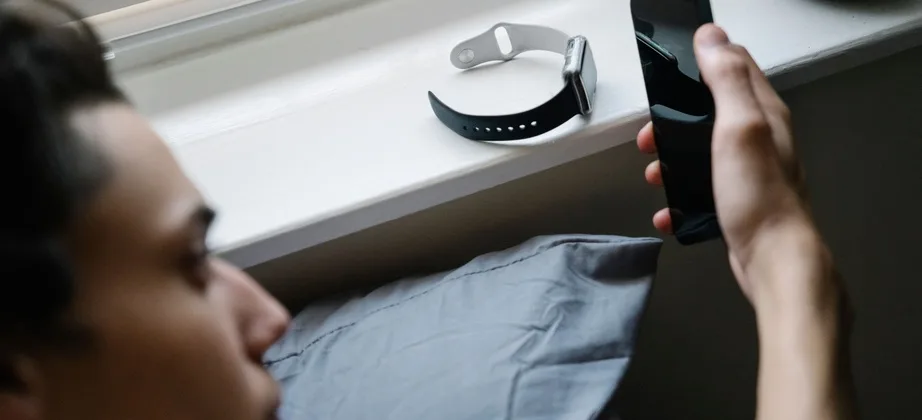
You finish your coffee and, shortly afterward, notice your heart beating differently. Maybe faster, maybe harder. The connection seems logical: if your heart reacts to the drink, could it be doing you harm?
“Palpitations are a symptom, not a diagnosis,” explains Elzo Mattar, director of the Department of Arterial Hypertension at the Sociedade Brasileira de Cardiologia (SBC, the Brazilian Society of Cardiology) and a professor at the Faculdade Estadual de Medicina de São José do Rio Preto (Famerp).
According to him, caffeine can heighten awareness of the heartbeat, cause a slight increase in heart rate or simply make a person more conscious of their own heart. That doesn’t necessarily mean an arrhythmia is present. Nor can one conclude, from the symptom alone, that the person is at greater risk of heart attack, sudden death or another cardiovascular complication.
This difference between what we feel right after consuming caffeine and what happens to cardiovascular health over time is at the heart of a scientific analysis by the American Heart Association (AHA), published in the journal Circulation.
The evidence points to a more complex picture than simply labeling coffee as “good” or “bad” for the heart.
The immediate effect doesn’t tell the whole story
Caffeine is rapidly absorbed by the body and acts on different systems. In the short term, it can temporarily raise blood pressure, and the intensity of that response varies from person to person. The AHA document also recognizes palpitations among the possible acute effects in some individuals and highlights individual variability in tolerance and clinical response.
There are also important differences in how quickly each body metabolizes the substance. Genetics, habits and other factors contribute to this variation.
This helps explain why the same amount of caffeine may be barely noticeable for one person and produce clear effects in another.
But a change observed minutes or hours after consumption does not, on its own, allow conclusions about what will happen years later.
When researchers follow coffee drinkers over long periods, most studies find no consistent increase in cardiovascular risk associated with moderate habitual consumption. Some observational studies even find associations with lower risk for certain outcomes.
That doesn’t mean coffee protects the heart.
Because much of this research is observational, other habits and characteristics of the participants may influence the results. Finding fewer cardiovascular events among coffee drinkers, therefore, does not show that the drink caused that difference. The AHA itself draws attention to the limitations of this type of study, including possible healthy-user bias.
There’s another difficulty: many of these studies investigated coffee, not caffeine alone.
“It’s one thing to say that moderate coffee consumption is associated with certain favorable cardiovascular outcomes; it’s quite another to attribute those effects to caffeine alone,” says Victoria Boin Aguiar, a physician with postgraduate training in nutrology.
In addition to caffeine, coffee contains various bioactive compounds. Some favorable associations have also been observed in studies of decaffeinated coffee, which underscores the difficulty of attributing the results to caffeine.
The arrhythmia paradox
It’s in heart rhythm disturbances that this relationship becomes particularly interesting.
In the DECAF randomized controlled trial, people with atrial fibrillation who already drank coffee and were scheduled for cardioversion were assigned to either caffeinated coffee consumption or abstinence. In the group instructed to drink at least one cup of caffeinated coffee per day, the risk of atrial fibrillation recurrence was 39% lower.
The result does not mean that coffee prevents atrial fibrillation in the general population or that it can be used as a treatment.
Another randomized trial found a different result: during periods of caffeinated coffee consumption, there was an increase in premature ventricular contractions, also known as ventricular extrasystoles. The randomized literature synthesized by the AHA shows that caffeinated coffee can increase the frequency of these contractions, although it did not show a corresponding increase in premature atrial contractions.
The apparent contradiction helps show why lumping all heart rhythm changes under the same “arrhythmia” label can lead to wrong conclusions.
Atrial fibrillation is a sustained arrhythmia that originates in the atria and can have significant clinical consequences, including an increased risk of stroke in certain people. Premature ventricular contractions are early beats that arise in the ventricles and are very common.
“We shouldn’t automatically translate ‘more premature beats’ into ‘more cardiovascular risk,’” says Mattar.
In the randomized trial on the acute effects of coffee, premature beats increased during consumption, but the study did not show that this resulted in more serious cardiovascular events.
The clinical significance depends on context. Isolated premature beats in a person without structural heart disease mean something different from a high burden in someone with symptoms, impaired heart function or another heart condition.
“The number alone doesn’t tell the whole story; you have to evaluate the person behind that Holter,” the cardiologist says.
That’s why simply stating that “coffee causes arrhythmia” — or that “coffee doesn’t cause arrhythmia” — says little about what the evidence actually shows.
Even brewing method can make a difference
Not all coffee represents exactly the same exposure.
One example is cafestol, a compound present in larger amounts in unfiltered preparations and capable of raising LDL cholesterol. Randomized trials cited by the AHA found increases in LDL with cafestol, but not with caffeine alone. Cafestol is present in greater amounts in preparations such as French press, Turkish or Greek coffee and boiled coffee, while paper filters substantially reduce its presence.
“When we talk about coffee’s cardiovascular effects, it’s not just how much you drink that matters, but also how that coffee is prepared,” explains Victoria.
Preparations such as French press, Turkish or Greek coffee and boiled coffee tend to retain more of these compounds than coffee made with a paper filter.
For people with high LDL or greater cardiovascular risk, Victoria notes that brewing method may be one more variable to consider, especially when consumption is frequent or in larger volumes.
So how much is moderate consumption?
The American Heart Association considers up to approximately 400 mg of caffeine per day — or about three to five cups of coffee of approximately 240 mL — a benchmark for moderate consumption that is generally safe for most adults.
But converting that number into cups can create a false sense of precision.
“A cup of coffee does not represent a standardized dose of caffeine,” says Victoria.
The amount varies with the type and quantity of beans, brewing method, coffee-to-water ratio, extraction time and volume of the drink.
Nor should the 400 mg be interpreted as a daily target or as a universal line between what is safe and what poses a risk. The response to caffeine varies from person to person.
An energy drink is not the same as coffee
The distinction becomes even more important when energy drinks and concentrated caffeine products come into play.
“Having the same amount of caffeine on the label doesn’t make an energy drink equivalent to a cup of coffee,” says Victoria.
Most of the evidence on habitual consumption and cardiovascular risk comes from coffee. Those findings cannot automatically be applied to energy drinks.
These products may have high concentrations of caffeine and contain other biologically active ingredients. In addition, studies of energy drinks have found cardiovascular effects that warrant caution, although the evidence base is smaller than that available for coffee. The AHA’s conclusion explicitly states that possible benefits observed with natural sources should not be extrapolated to synthetic products or high-dose caffeine; the available data on energy drinks, though limited, tend to suggest cardiovascular harm.
That doesn’t mean every energy drink causes a heart problem. It means there is no basis for considering coffee and energy drinks equivalent simply because both contain caffeine.
The same caution applies to very high doses and concentrated products.
When the answer needs to be individual
Data from large populations help us understand risk, but they don’t, on their own, determine what a specific person should do.
Mattar considers it especially important to individualize consumption when there is a clear, repeated link between caffeine and palpitations; in the presence of frequent or highly symptomatic premature ventricular contractions; in people with known arrhythmias or structural heart disease; and in cases of significant or uncontrolled hypertension.
That doesn’t mean all of these people need to give up coffee. It means that a population benchmark like 400 mg per day is no substitute for evaluating the clinical context.
And feeling palpitations doesn’t confirm that an arrhythmia occurred.
When symptoms are frequent or significant, Mattar explains, documenting the heart rhythm — possibly with an electrocardiogram or Holter monitor — is what makes it possible to verify whether a disturbance really exists.
The question “Is coffee good or bad for the heart?” therefore offers only two answers for a relationship that depends on many variables.
For most adults, moderate habitual caffeine consumption is considered generally safe. That doesn’t turn coffee into a cardiovascular prevention strategy, doesn’t mean all caffeine sources are equivalent and doesn’t eliminate individual differences. The AHA’s synthesis emphasizes precisely the heterogeneity of effects and the need to move toward more individualized recommendations.
Likewise, noticing your heart beating differently after a cup doesn’t, on its own, reveal what that drink means for your long-term cardiovascular health.
Between the immediate sensation and the risk, what matters is the amount consumed, the source of caffeine, frequency, brewing method, the type of cardiovascular effect and the characteristics of the person drinking it.
Scientific references
1. Marcus GM, Hu FB, van Dam RM, Cornelis MC, Dewland TA, Kang J, Larsson SC, Page RL II, Parekh N; American Heart Association. Caffeine and Cardiovascular Disease: A Scientific Statement From the American Heart Association. Circulation. 2026;154. doi: 10.1161/CIR.0000000000001454. This is the main scientific source for this article.
2. Wong CX, Cheung CC, Montenegro G, et al. Caffeinated coffee consumption or abstinence to reduce atrial fibrillation: the DECAF randomized clinical trial. JAMA. 2025;335:317. doi: 10.1001/jama.2025.21056.
3. Marcus GM, Rosenthal DG, Nah G, et al. Acute effects of coffee consumption on health among ambulatory adults. New England Journal of Medicine. 2023;388:1092–1100. doi: 10.1056/NEJMoa2204737. This is the Coffee and Real-time Atrial and Ventricular Ectopy trial, used for the discussion of premature beats.
4. Ding M, Bhupathiraju SN, Satija A, van Dam RM, Hu FB. Long-term coffee consumption and risk of cardiovascular disease: a systematic review and dose-response meta-analysis of prospective cohort studies. Circulation. 2014;129:643–659. doi: 10.1161/CIRCULATIONAHA.113.005925.
5. Gualberto PIB, Benvindo VV, Waclawovsky G, Deresz LF. Acute effects of energy drink consumption on cardiovascular parameters in healthy adults: a systematic review and meta-analysis of randomized clinical trials. Nutrition Reviews. 2024;82:1028–1045. doi: 10.1093/nutrit/nuad112.
6. Urgert R, Katan MB. The cholesterol-raising factor from coffee beans. Journal of the Royal Society of Medicine. 1996;89:618–623. doi: 10.1177/014107689608901107. Reference for cafestol and cholesterol.